
Share this page:
Summer in Victoria is breathtaking, from its iconic beaches to its lush green landscapes. Yet, Australia’s warm weather also brings unique challenges. From sun protection to fire safety and water awareness, this guide provides helpful tips to ensure you enjoy a safe and care-free summer.
Apps to stay safe this summer!
Before you head outdoors, make sure you’ve got these essential apps on your phone. They’ll help you stay informed, prepared, and safe – wherever you are.
Safety in the water
Australia has some of the best beaches in the world, and the best way to enjoy them is by staying safe.
Before you enter the water, it’s important to keep the following safety tips in mind:
- Swim between the red and yellow flags at a patrolled beach, where lifeguards can help you. You can find patrolled beaches on the Beachsafe App.
- Always swim and visit the water with friends.
- Check and follow safety signs before you enter the water.
- Check the weather before you go to the water – conditions change quickly when the weather changes.
- Never mix alcohol and swimming.
- Learn about rip currents – the biggest danger at Victorian beaches.
To keep yourself and your friends safe, download the free Beachsafe App and use it to check the beach danger rating and local conditions before you visit a beach.
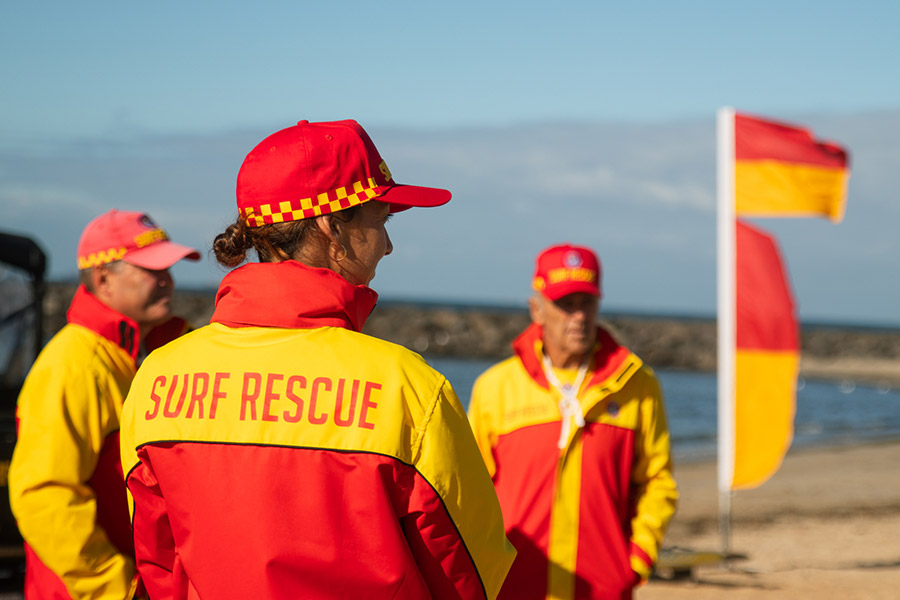
If you find yourself in trouble, the best thing to do is stay calm and hold one arm up in the air. This will signal to the lifeguards on duty that you need assistance.
Learn more about water safety via the Victorian Government. You can also find translated information on staying safe in the water.
Bushfire safety
It is very important during the fire season to stay informed.
Watch this video to understand the bush fire danger rating. During the warmer months of December to April, check the danger rating every day for where you are or where you plan to travel.
View transcript
[Zoom in on fire danger rating sign]
[Speaker] Fire Danger Ratings tell you how dangerous a fire could be if one started.
This is important to you because the higher the rating,
the more dangerous the conditions.
The Rating should be your prompt to take action.
Fire Weather Districts
There are nine fire weather districts in Victoria and the Fire Danger Rating is forecast daily for each district, up to four days in advance.
Fire Danger Ratings start at MODERATE.
In these conditions, most fires can be controlled.
The next level is HIGH.
Fires can be dangerous in these conditions.
Be ready to act.
The safest option is to avoid bushfire risk areas.
An EXTREME rating means fires will spread quickly and be extremely dangerous.
Take action to protect your life and property.
Reconsider travel through bushfire risk areas.
A CATASTROPHIC rating means that if a fire starts and takes hold, lives are likely to be lost.
You should leave bushfire risk areas on these days.
Homes cannot withstand fires in these conditions.
Stay safe by going to a safer location early in the morning or the night before.
Know your fire weather district, if you live, work or travel through a bushfire risk area, make it a habit to check the Fire Danger Rating every day.
Leaving early, well before any fire has started is always your safest option.
Remember, monitor warnings and stay informed.
Vic Emergency is the official Victorian Government website for emergency warnings and information. This is the best and most up-to-date resource for incidents, warnings and other weather and fire-related information. You can download the VicEmergency app (AppStore and Google Play) and set your location to receive notifications and warnings.
Fire risk is most extreme if you live around or near forest or woodland. The Country Fire Authority (CFA) has a wealth of resources to help you understand your fire risk and know what to do before and during a fire. One of the best ways to start planning is to look at where you live.
Safety in the sun and heat
While summer is a great time to get out and enjoy the outdoors, it’s important to take care in the heat as Australia experiences some of the highest levels of ultraviolet (UV) radiation in the world. UV radiation comes from the sun and is a leading cause of skin cancer.
Thankfully, it’s easy to protect yourself from the harmful effects of the sun. Anytime you are going outside - even on cool or overcast days - make sure you use sunscreen with a sun protection factor (SPF) of 50+.
It’s also a good idea to wear a hat and sunglasses and stay in the shade as much as you can.
Overexposure to hot weather can cause cramps, dehydration, exhaustion and even heatstroke, which, in severe cases, can be deadly. On extremely hot days, drink plenty of water and avoid vigorous exercise or activity, as these may cause you to overheat.
To check the UV rating, download the SunSmart Global UV app to receive the UV forecast on your smartphone.
Thunderstorm asthma
During grass pollen season (1 October through to the end of December) people may notice an increase in asthma and hay fever. It also brings the chance of thunderstorm asthma. Thunderstorm asthma is thought to be triggered by a unique combination of high amounts of grass pollen in the air and a certain type of thunderstorm. For people who have asthma or hay fever this can trigger severe asthma symptoms.
Even if you don't think you have asthma or hay fever, don't ignore symptoms like wheezing or shortness of breath – check with your GP.
View transcript
Grass pollen season brings the chance of thunderstorm asthma.
It can affect those with asthma or hay fever – especially those who experience wheezing or coughing with their hay fever.
These thunderstorm asthma events don't occur every year but when they do, they can happen from October through December in south-east Australia.
These events can be sudden, serious, and even life threatening and many people may need help at the same time
So how does this happen?
Pollen grains from grasses get swept up in the wind and carried for long distances.
Some burst open and release tiny particles that are concentrated in the wind, just before the storm.
They're small enough to go deep into the lungs and can make it difficult to breathe.
This can become very severe, very quickly.
So how do you protect yourself during grass pollen season?
If you've ever had asthma or hay fever, or if you sneeze and wheeze during pollen season, speak to your doctor or pharmacist about an action plan and the things you can do to protect yourself.
It's best to avoid being outside during thunderstorms from October through December – especially in the wind gusts that come before the storm. Stay inside and close your doors and windows.
Never ignore symptoms of asthma – wheezing, shortness of breath, chest tightness and coughing.
And, know the 4 steps of asthma first aid.
Protect yourself this pollen season.
Managing asthma and allergies matters.
Visit betterhealth.vic.gov.au for more information.
(End transcript)
For more information about thunderstorm asthma, who is at risk, how to protect yourself, and resources in English and other languages, visit the Better Health Channel website.
Page last updated: