Victoria’s primary and secondary schools offer high-quality education, creating strong pathways to higher education. They provide a supportive learning environment, including specialised English language programs to help students succeed academically.
This page will help you:
- Understand how Victoria’s primary and secondary schools are structured.
- Learn about the globally recognised qualifications, including the Victorian Certificate of Education (VCE) and International Baccalaureate (IB).
- Discover the different application types for international school students and relevant school fees.
Victorian school system
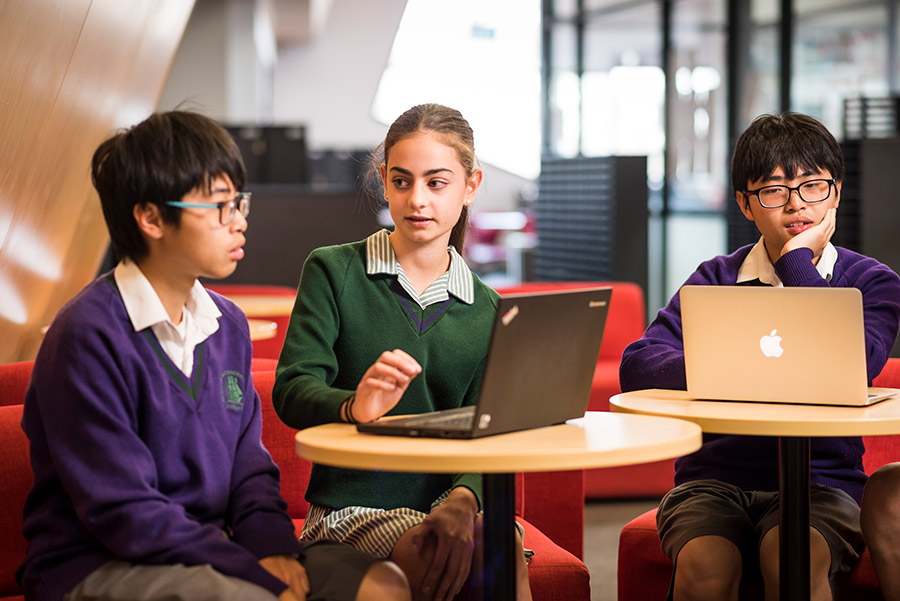
Victorian school education begins with primary school and progresses to secondary school.
- Primary school: For children aged 5 to 12 years.
- Secondary school: For children aged 12 to 18 years.
- School times: Typically run from 8:30 am to 3:30 pm, Monday to Friday.
School terms
Victorian schools operate on a yearly calendar that is divided into 4 terms:
- The school year starts in late January or early February and ends in December.
- There are short holidays between terms and a longer summer holiday in late December and throughout January.
Learning environments
- Co-education: Most Victorian government schools teach both boys and girls together. There are also private single-gender schools available if preferred.
- English as an additional language (EAL): Approximately 25% of Victorian school students come from language backgrounds other than English. Many schools actively support these students through comprehensive EAL programs.
- Bilingual programs: Some schools also offer bilingual education in various languages, including Mandarin, Vietnamese, Indonesian and German.
Pathways to higher education: understanding school qualifications in Victoria
Victorian Certificate of Education (VCE):
- The VCE is the official government-recognised qualification for secondary school.
- The VCE is commonly used for university entry in Australia and internationally.
International Baccalaureate (IB):
- Many schools offer the IB programme, which is a well-recognised international secondary school qualification.
Applying to a Victorian government school
There are different types of applications that students can select depending on their individual situation, including the length of time they wish to study at a Victorian government school or whether they are coming to Victoria with their parents. School fee costs vary according to the student’s education journey.
- Application types: The 4 types of applications include Standard, Study Abroad, Dependant or Temporary.
- School fees: International student tuition fees depend on the student's application type and visa subclass and category.
Understanding primary and secondary schooling in Melbourne and Victoria is critical to setting up successful education pathways for international students. Whether you are a parent planning for your child’s education or a student looking to explore future options, Victoria’s schools provide a safe, inclusive, and high-quality foundation.
Start planning your journey now
Learn more about Victorian schools on the Department of Education Victoria website.
Frequently Asked Questions (FAQs)
Why is it important for international students to understand Victoria’s school system?
For students and families planning to pursue higher education in Melbourne, it’s helpful to understand the schooling options that create strong pathways to tertiary studies. The Victorian school system is world-class, emphasising inclusivity, academic excellence and language support.
As a tertiary international student, can I send my child to school free of charge?
If you are studying in Victoria on a Student visa (subclass 500) and you would like to enrol your child in a local school, education tuition fees may apply.
Do schools offer support for students who are learning English as an additional language?
Many schools have specialised EAL programs to support students from diverse language backgrounds.
What are the pathways to enter Australian universities?
Students who complete the Victorian Certificate of Education (VCE) or the International Baccalaureate (IB) during secondary school are academically well-prepared to apply to Australian universities and higher institutions.
When do Victorian schools start their academic year?
The school year typically starts in late January or early February and ends in December, with four terms and a summer break during late December and January.
What should I do after graduating from school as an international student?
If you’ve graduated from a Victorian school as an international student and are ready to start your higher education journey, your next step is to apply for university or TAFE courses through the Victorian Tertiary Admissions Centre (VTAC).
VTAC provides a streamlined process for applications to universities and some TAFEs in Victoria.
You can explore your options by visiting Our Universities or TAFE and Vocational Education page to find detailed information about higher education providers in Victoria. Additionally, the Study Melbourne Course Finder is a helpful tool for discovering courses that match your interests and career goals.
Page last updated: